Practical puppy support for real life.
We are Rebecca, Lee, and Marlowe. We are not dog trainers. We are a busy family figuring out puppy life as we go and trying to raise a dog who can be part of our actual lives.
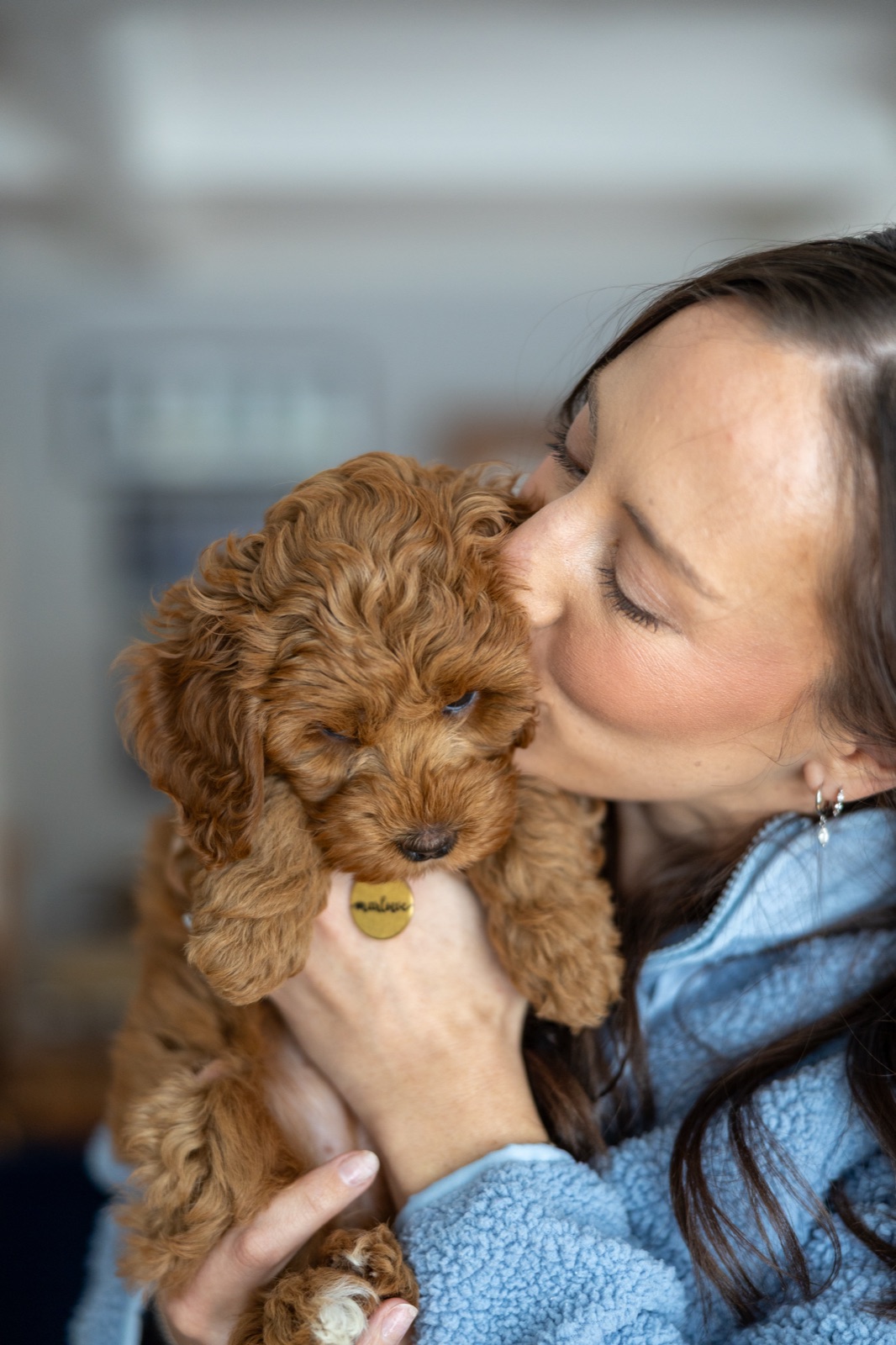
Rebecca
Steady. Thoughtful.
Sees the bigger picture.
Rebecca is a registered nurse and spends her days supporting families. That lens carries into how she thinks about Marlowe: development, nervous systems, attachment, routines, and what a puppy is actually capable of in the moment.
She cares about calm, not just commands. When a puppy is biting, unsettled, or struggling, she looks first at sleep, stress, and the environment before assuming the puppy is doing something wrong.
Lee
Creative, intuitive,
outdoors-focused.
Lee handles the creative side, the systems, the photos, and a lot of the outdoor adventures. He is the one watching how Marlowe moves through the world, where she feels brave, and where she needs more space.
Together, we share puppy tips, real life, and the everyday moments in between. Some days feel easy. Some days really do not. We share both, because that is what raising a dog in a real family looks like.

We focus on calm, understanding what is normal for puppies, and supporting them while they learn.
Who this is for
Families raising a puppy in real life. People who want practical training that fits into their day. And anyone who wants to follow along with a very loved dog as she grows.
Come along for the ride
Follow the daily reality on Instagram, or sign up and we'll send you the good stuff directly.