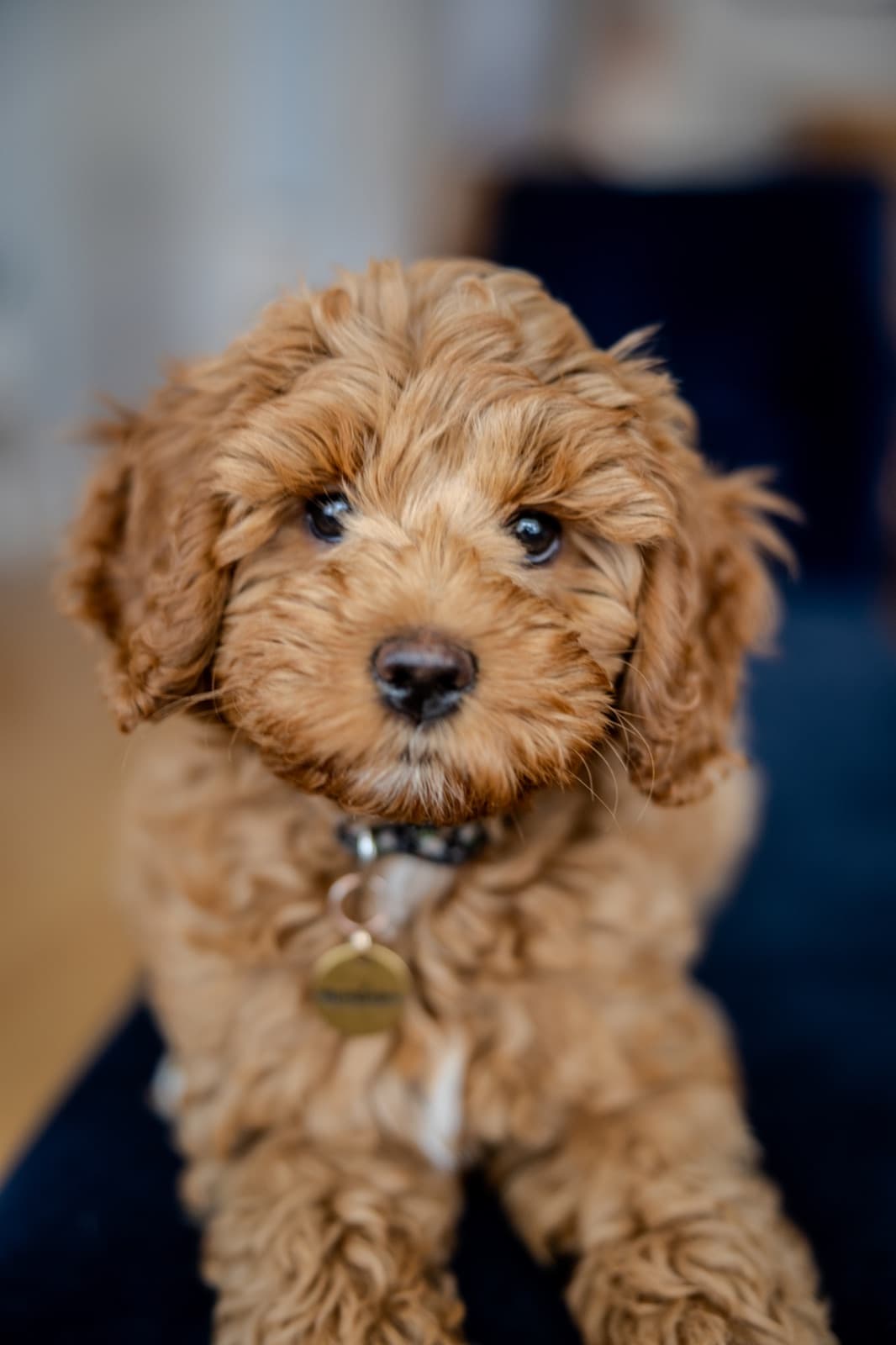
Marlowe is going to spend her whole life being touched by humans. Vet visits. Grooming appointments. Nail trims. Ear checks. Teeth cleaning. Kids reaching for her. Strangers petting her. If she doesn't trust hands, every one of those experiences will be stressful for her. And stressful for whoever is on the other end.
So we started early. Not with grooming. With touch. One second at a time.
The one-second rule
This is where most people go wrong. They grab a paw and hold it. The puppy pulls away. They hold tighter. The puppy learns that once a hand is on them, they can't leave. And now you have a dog who yanks their paw away the second you reach for it.
We did the opposite. One touch. One second. Treat. That's it.
Touch a paw. One second. Treat. Touch an ear. One second. Treat. Lift the lip to see teeth. Half a second. Treat. Touch the tail. One second. Treat. The whole session takes maybe ninety seconds and Marlowe thinks it's the best game in the world because treats keep appearing.
Over days and then weeks you build duration. One second becomes two. Two becomes five. Five becomes holding the paw for ten seconds while you look between the toes. But you never jump ahead. You never hold longer than the puppy is comfortable with. The moment you feel tension or a pull, you let go. End on a win. Try again tomorrow.
The daily routine
We do handling every day. Not as a formal session. It's folded into life. When Marlowe is on my lap in the evening I'll gently touch her paws one at a time. When she's eating a lick mat Rebecca will lightly lift an ear flap. When she's relaxed after a nap I'll run my hand along her belly and touch the base of her tail.
It's always paired with something she already likes. The lick mat. A chew. A calm moment on the couch. She never notices that she's being “trained” because it doesn't feel like training. It feels like being close to someone who touches her gently and gives her good things.
The boys do it too. They know to touch Marlowe's paws when she's settled and relaxed. They know to be gentle. They know that if she pulls away they stop. It's become second nature for the whole family now.
Sound desensitization
Handling is only half of grooming prep. The other half is sounds. Clippers. Dryers. Electric toothbrushes. The hum of a grooming table. These are things most puppies have never heard, and if the first time they hear a clipper it's buzzing right next to their foot, you're going to have a bad time.
We started with distance. Hair dryer turned on from across the room while Marlowe ate her dinner. She looked up. Went back to eating. Good enough. Next day, a couple of feet closer. Day after that, same distance but pointed vaguely in her direction with no direct air. Within a week she didn't care.
Same approach with nail clipper sounds. We'd clip a piece of dry pasta near her while she ate. The snap sound is similar enough. She got used to it without ever having a clipper touch her nail. By the time we did the first actual nail trim, the sound was already boring.
- Start far away.Every new sound should be introduced at a distance where the puppy notices but doesn't react.
- Pair with food. Sound happens while good things are happening. The association builds itself.
- Close the distance slowly.Over days, not minutes. There's no rush.
- Watch for stress signs.Lip licking, head turning, freezing. If you see them, you're too close or too loud. Back up.
Trust, not tolerance
This is the distinction that matters most to me. A lot of dogs tolerate handling. They'll sit through a nail trim because they've learned that struggling doesn't work. They're still stressed. They're still bracing. They've just shut down about it.
That's not what we want. We want Marlowe to actually trust that being handled is fine. That hands are safe. That a touch on her paw means something good is coming, not something uncomfortable she has to endure.
There's a real difference between a dog who holds still because they're resigned and a dog who holds still because they're relaxed. You can see it in the body. Loose muscles versus tight. Soft eyes versus wide. A tail that's neutral versus one that's tucked. The outside behaviour might look the same to a casual observer, but the internal experience is completely different.
Playing the long game
Marlowe is going to be groomed every six to eight weeks for the rest of her life. That's a lot of baths, a lot of dryers, a lot of hands on her body. The investment we're making now, a few minutes a day of gentle exposure, is going to pay off for the next fifteen years.
Her first grooming appointment is coming up soon. I'm not worried about it. She's been touched everywhere. She's heard the sounds. She's had positive experiences with every part of the process. Will it be perfect? Probably not. She's still a baby. But the foundation is there. And that's the part you can't rush.
Stay close
Weekly notes on raising Marlowe. First access when the course launches.